
2026 Filter Workshop
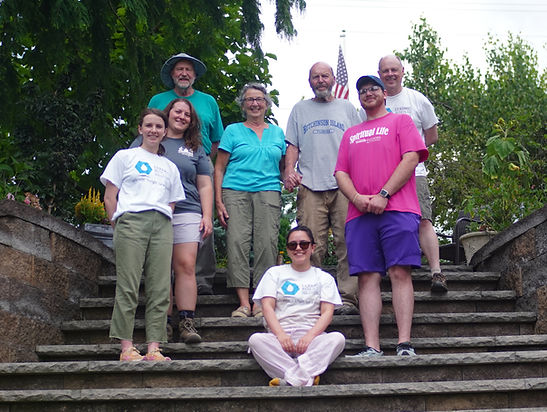
Workshop participants and teachers
During the three day workshop, participants learned the basic 8 steps of the filter making procedure.
1. Raw material Preparation and Testing
a. Drying and Processing to proper particle size
b. Clay Plasticity testing - After this test, clay is used to make a bar to be fired and used in absorption test.
c. Burnable (Sawdust, Rice Husks) Matrix testing


2. Development of Material Mixing Formulas
a. Initial mixing formulas are for each separate clay (clay, sawdust, sand and water)
b. Results of initial formulas will determine proper sequence for formula change


3. Actual Mixing of Materials
a. Formulas are measured by weight, not volume
b. Materials are first thoroughly mixed while dry
c. Water is then added slowly and measured; excess water is to be avoided
d. Wet mixture is thoroughly mixed


4. Forming and Pressing of Filters
a. Mixes are hand formed into cubes sufficient to press 1 filter (normally 7.5 kg)
b. Cubes are allowed to slake for at lease 24 hrs. before pressing; covered if needed to avoid excess drying or vise versa
c. Filter Press needs to be capable of applying pressure of 20 tons, and properly centered
d. Before ejection of the filter from the female mold, a board should be used to ensure proper compressionof the filter rim


5. Drying and Fixing of Filters
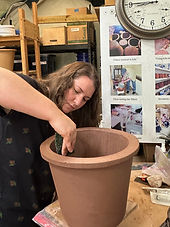
a. Filters are allowed to dry for a day or two, until "leather hard"; then imperfections in appearance are fixed and a proper ID number applied
b. Fixed filters are placed in safe place for complete drying, covered if needed to avoid drying cracks

6. Proper Firing of Filters
a. Filters are fired in a kiln to a temperature of 900 degrees C
b. Care must be taken to avoid filter cracking at the points of burnable combustion and Quartz Inversion
7. Testing of Fired Filters
a. Flow Test of each Filter - Filters are soaked in water for 1 hr., inverted to check for cracks, removed to dry for 1 hr. , placed in buckets, filled with water, allowed to flow for 1 hr. Bucket contents are measured. Target is flow rate between 2L and 4L per hr.
b. Bacterial Removal Tests are conducted. Bacterial removal must be in excess of Log 2
c. Filters are checked for appearance, durability & absorption rates from bars


8. Application of Colloidal Silver to Finish Filters
a. Diluted 3.2% Colloidal Silver solution is applied inside and outside of filters
b. This is applied to deal with contamination caused by filter handling prior to use